Invoice Finance vs Business Loan: Which Is Better for UK SMEs?
If you’ve ever sat in your office on a Friday afternoon, staring at a stack of unpaid invoices while simultaneously eyeing your upcoming payroll or a VAT deadline, you’ve probably had “The Thought.” That thought is: “I need cash, and I need it tomorrow.“
For most UK small and medium-sized enterprises, the choice usually boils down to two heavyweights: invoice finance vs loan. It’s a classic financial showdown.
On one side, you have the traditional bank loan—the old reliable. On the other hand, you have invoice finance—the agile, modern alternative that’s gaining serious traction in 2026.
But which one is actually better for your business? There’s no one-size-fits-all answer, but there is a “right for right now” answer. Let’s break down the pros, the cons, and the “oh, I didn’t know that” moments of both.
The Traditional Business Loan: The Lump Sum Approach

We’re all familiar with how a loan works. You ask a lender for a specific amount of money, they check your credit score, and if you’re approved, they drop a lump sum into your account. You then spend the next few years paying it back with interest.
The Pros:
- Total Autonomy: Once the money is in your account, the bank generally doesn’t care how you spend it, as long as the repayments keep coming.
- Big Purchases: If you need to buy a new delivery van, a piece of heavy machinery, or a 10-year lease on a warehouse, a loan is usually the way to go.
- Predictability: You know exactly how much is leaving your account every month. It makes long-term budgeting for UK business cash flow a lot easier.
The Cons:
- Fixed Debt: A loan is a liability on your balance sheet. Whether you have a record-breaking sales month or a total washout, that monthly repayment isn’t going anywhere.
- The “No” Factor: In 2026, UK banks have become increasingly cautious. If your credit score isn’t pristine or you haven’t been trading for three-plus years, getting a “yes” can feel like winning the lottery.
Invoice Finance: The “Self-Funding” Alternative
Now, let’s look at the challenger. Invoice finance, specifically invoice factoring or invoice discounting, is fundamentally different. It isn’t “new” money; it’s your money, just accessed earlier.
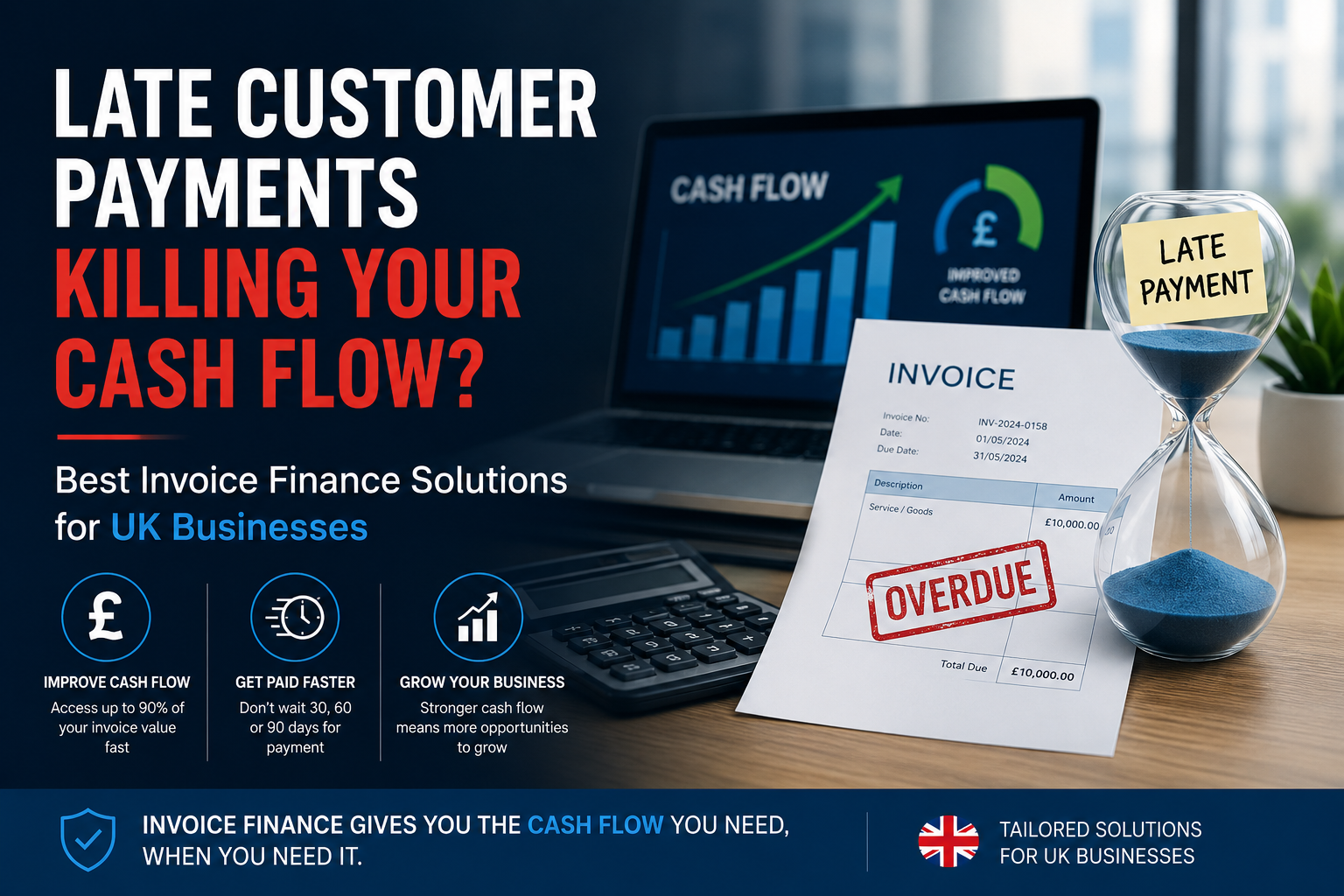
Instead of waiting 30, 60, or 90 days for a client to pay, an invoice finance provider (like the team at Best Invoice Finance UK) advances you the majority of that invoice value (usually 80% to 95%) within 24 hours of you raising it.
The Pros:
- Scalability: As your sales grow, your funding grows. You don’t have to keep going back to the bank to ask for a limit increase.
- No New Debt: Technically, you aren’t taking on a loan; you’re selling an asset (your invoice). It’s a much “cleaner” way to manage cash flow.
- Speed: In the digital age of 2026, most platforms sync directly with Xero or Sage. You can often get set up and receive your first payment in less than a week.
The Cons:
- B2B Only: If you run a coffee shop or a hair salon where customers pay at the point of sale, this won’t work for you. You need to be billing other businesses via invoices.
- Fees: You’ll pay a service fee and a discount rate. While often comparable to loan interest, it can feel more “visible” because it’s deducted from each invoice.
Invoice Finance vs Loan: Which Wins in Specific Scenarios?
To settle the invoice finance vs loan debate, we have to look at what’s actually happening in your warehouse or office.
Scenario A: The “Growth Spurt”
You’ve just landed a massive contract with a major retailer. You need to buy raw materials and pay staff today, but the retailer won’t pay you for 60 days.
- The Winner: Invoice Finance. Why? Because a loan is a static amount. If the contract gets even bigger next month, a loan might leave you capped out. Invoice finance expands as you bill.
Scenario B: The Major Infrastructure Project
You want to refurbish your headquarters or invest in a new software platform that will take two years to build.
- The Winner: Business Loan. Why? Invoice finance is designed for short-term working capital. It isn’t built for long-term “bricks and mortar” investments.
Scenario C: Dealing with HMRC
Your VAT bill is due, but three of your biggest clients are “late” with their payments.
- The Winner: Invoice Finance. Why? It bridges the “Tax Gap” perfectly. You can unlock the cash from those late payers instantly to stay compliant with HMRC without the long-term commitment of a 5-year loan.
The 2026 Factor: Why Technology Matters
In the past, invoice finance was seen as a “last resort” for struggling companies. That stigma is dead. Today, some of the fastest-growing UK tech and construction firms use an invoice finance facility because it’s strategically smarter than traditional debt.
Best Invoice Finance UK specialises in connecting SMEs with lenders who understand the specific pressures of the UK market in 2026—higher interest rates, shifting trade regulations, and the need for instant digital integration.
Final Verdict: It’s All About the “Why”
Still confused about invoice finance vs loan. If you need a one-off sum for a specific, tangible asset, go for the loan. It’s simple and structured.
However, if your problem is that your business has plenty of work, but the money is always stuck in your debtors’ ledger, then invoice finance is the superior tool. It gives you control over your own timeline, ensuring that your business cash flow remains as fluid as your ambitions.
Also Read:- How Invoice Finance Helps UK Businesses Manage Tax Pressure | Guide 2026
Frequently Asked Questions
Q. Is invoice finance more expensive than a bank loan?
Ans:- Not necessarily. When you factor in the setup fees and the flexibility of only paying for what you use, invoice finance is often very competitive, especially for businesses that don’t want to be locked into long-term interest payments.
Q. Will my customers know I’m using invoice finance?
Ans:- Only if you choose Invoice Factoring, where the provider handles collections, if you choose Invoice Discounting, it remains completely confidential, and you continue to manage your own client relationships.
Q. Can I have both a loan and an invoice finance facility?
Ans:- Yes, many UK SMEs use a “hybrid” approach. They might have a long-term loan for their premises and an invoice finance facility for their day-to-day operational costs.
Q. How long does the commitment last?
Ans:- Standard bank loans often last 3 to 10 years. In contrast, many invoice finance providers now offer rolling monthly contracts or “selective” options where you only fund specific invoices when you need to.
Q. Does my credit score matter?
Ans:- For a loan, your credit score is the main event. For invoice finance, the lender is more interested in the creditworthiness of your customers, making it a great option for newer businesses.
Discover the Latest Trends
Stay informed with our latest articles and resources.