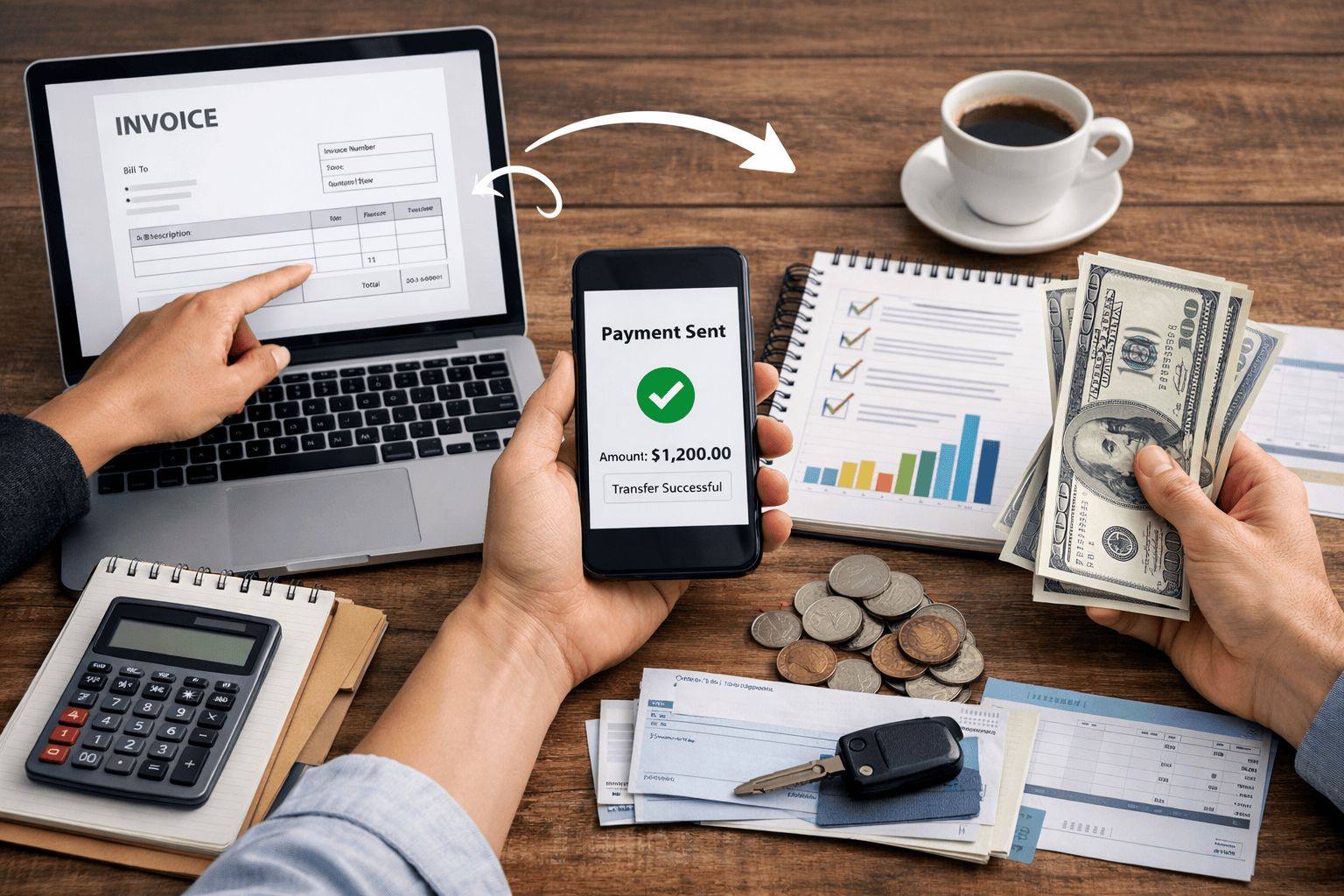
Step-by-Step Process: From Sending Invoices to Receiving Cash
So, you’ve done the hard work. The project is finished, the client is happy, and you’ve hit “send” on that invoice. Now comes the part every business owner loves to hate: the waiting game. In a perfect world, that money would hit your bank account instantly.
In the real world (especially the UK business world in 2026), you’re often looking at 30, 60, or even 90-day payment terms. While you wait, your rent, payroll, and suppliers certainly aren’t waiting for you. This is where the invoice to cash magic happens.
If you’ve been looking into accounts receivable financing, you’ve probably heard it’s “fast,” but what does the actual day-to-day look like? Let’s understand the process and show you exactly how to jump from “billing” to “banked” without the month-long headache.
What is the Invoice to Cash Process?
In the context of invoice finance, the invoice to cash cycle is the bridge between you issuing a bill and receiving the liquid capital. Instead of waiting for your customer to pay eventually, an invoice finance provider “buys” the debt from you.
They give you most of the money upfront (usually within 24 hours) and then collect the full amount from your customer later. It’s essentially turning your unpaid invoices into an immediate revolving credit line.
The Step-by-Step Breakdown: From Send to Spend
If you’re considering an invoice finance process UK setup, here is the roadmap of how a typical transaction flows.
Step 1: You Invoice Your Customer
Business as usual. You provide your goods or services to another B2B client and generate an invoice. To make the invoice to cash cycle as smooth as possible, ensure your invoice is clear, has a unique reference number, and clearly states the payment terms.
Step 2: You Upload the Invoice to the Platform
Once the invoice is sent to your client, you “assign” it to your finance provider. In 2026, this is rarely done via snail mail or clunky spreadsheets.
Most modern UK providers use cloud-based platforms that sync directly with your accounting software (like Xero, Sage, or QuickBooks). With a couple of clicks, the invoice is sent to the lender for verification.
Step 3: The Verification Phase
The lender needs to make sure the invoice is “real.” They aren’t being nosy; they just need to confirm that the goods were delivered or the service was completed.
- For Invoice Factoring: The lender might give your client a quick, professional call or email to confirm receipt.
- For Invoice Discounting: This is usually confidential, meaning the lender stays in the background and you keep control of your sales ledger.
Step 4: The First Installment (The “Advance”)
It is the part everyone likes. Once the invoice is verified, the lender releases the “advance rate.” In the UK, it is typically between 70% and 95% of the total invoice value.
Example: You send a £10,000 invoice. If your advance rate is 90%, you get £9,000 in your bank account almost immediately, usually the same day or the next morning.
Step 5: You Use the Cash
The money is yours to use. Whether it’s to pay your team, buy raw materials for the next job, or settle a tax bill, the “gap” in your cash flow is officially closed. You aren’t “in debt” in the traditional sense; you’ve simply accessed your own earned money early.
Step 6: Your Customer Pays the Invoice
When the 30 or 60 days are up, your customer pays the invoice.
- If you’re using Factoring, they pay the lender directly into a dedicated control account.
- If you’re using Invoice Discounting, they pay you as normal, and you then settle up with the lender.
Step 7: The Final Settlement (The “Rebate”)
Once the lender receives the full payment from your customer, they release the remaining 5% to 30% that they held back. They deduct a small service fee (the “discount charge”) and send the rest to you.
Why the UK Invoice Finance Process is Different in 2026
The invoice finance process in the UK market has evolved. It’s no longer just a “last resort” for struggling companies; it’s a strategic tool for high-growth startups.
- Speed: Digital integration means the invoice to cash time has shrunk from days to minutes in some cases.
- Flexibility: “Selective Invoice Finance” allows you to pick and choose exactly which invoices you want to fund, rather than signing over your whole turnover.
- Security: Many UK providers now offer “Non-Recourse” options, which act like insurance. If your customer goes bust and never pays the invoice, you aren’t on the hook to pay the money back to the lender.
Common Pitfalls to Avoid in the Invoice to Cash Process
Even though the invoice to cash process is a streamlined system, a few things can slow down your cash flow.
- Concentration Limits: If you only have one customer, some lenders might be nervous. They prefer a spread of different clients.
- Hidden Fees: Always check the fine print for “refactoring fees” or “minimum monthly charges.” The best invoice finance deals are transparent about their costs.
- Contractual Prohibitions: Some large companies have “ban on assignment” clauses in their contracts. While the UK government has moved to make these less restrictive, it’s always worth checking if your customer allows their invoices to be financed.
The Big Picture: Why It Matters
At the end of the day, an invoice to cash strategy is about control. When you rely on a customer’s accounts department to decide when you get paid, they are essentially controlling your growth.
By using financing options from the Best Invoice Finance UK, you take the steering wheel back. You know when cash is coming in, which allows you to plan and expand with confidence. It turns your sales ledger from a list of “hopes and dreams” into a literal ATM for your business.
FAQs
1. How fast is the “Invoice to Cash” turnaround?
Once your facility is set up, you can usually get funds within 4 to 24 hours of uploading an invoice.
2. Does my customer need to know I’m using finance?
Not necessarily. With Confidential Invoice Discounting, the process is invisible to your clients.
3. What percentage of the invoice can I get upfront?
Typically, between 70% and 95%, depending on your industry and the creditworthiness of your customers.
4. Is this the same as a bank loan?
No. It’s a revolving facility based on your sales. As your business grows and you send more invoices, your “credit limit” grows automatically.
5. What happens if a customer doesn’t pay?
If you have “Non-Recourse” finance, the lender takes the loss. If you have “Recourse” finance, you will eventually have to pay the advance back or swap it for a different invoice.
Discover the Latest Trends
Stay informed with our latest articles and resources.