How Invoice Finance Helps UK Businesses Manage Tax Pressure | Guide 2026
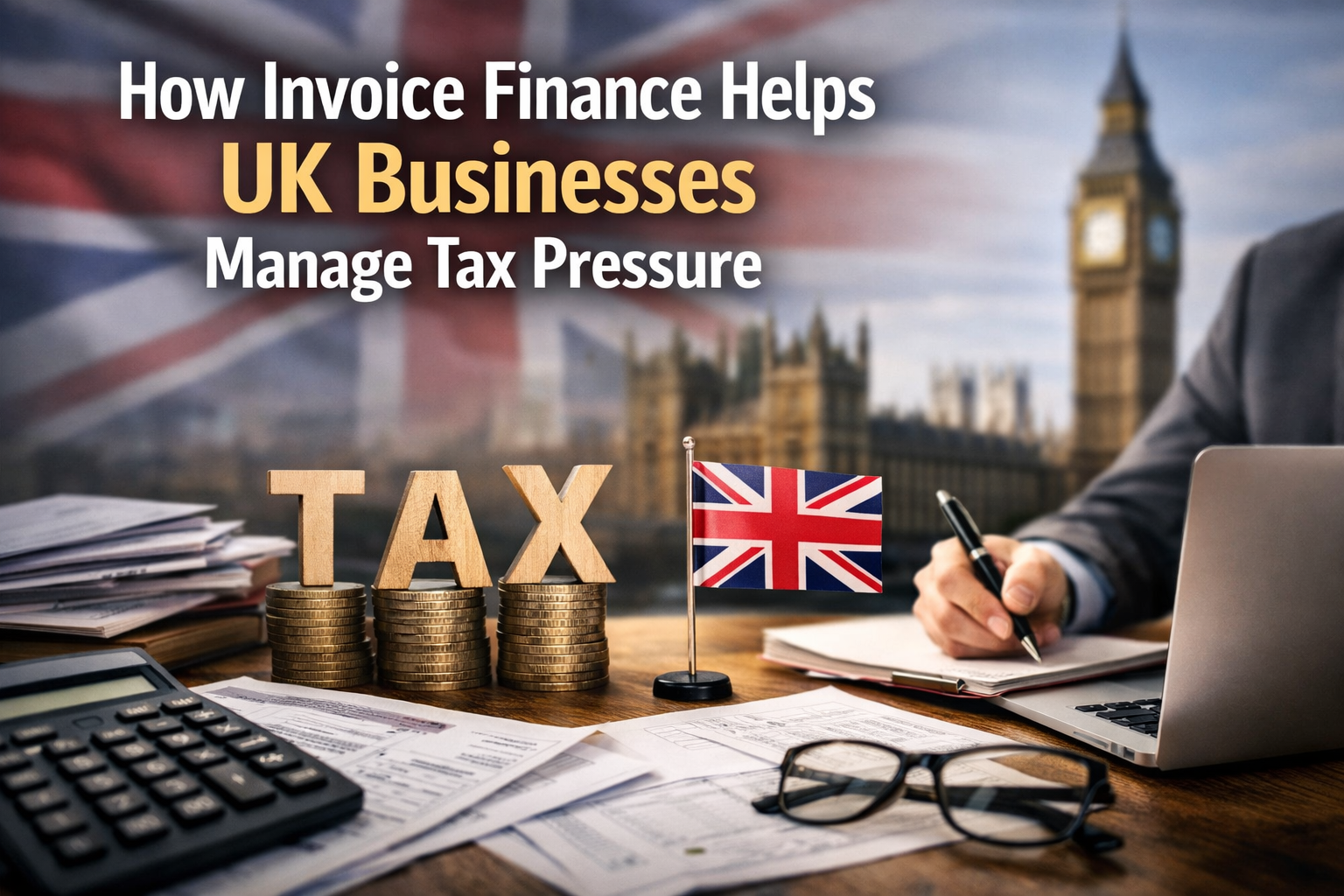
If you’re running a business in the UK, you already know that the tax man doesn’t care about your “seasonal dips” or that one client who always pays 30 days late. Whether it’s the VAT quarter-end, Corporation Tax deadlines, or the monthly PAYE scramble, tax pressure is one of the biggest hurdles to maintaining a healthy UK business cash flow.
In 2026, the fiscal landscape is tighter than ever. With new legislation increasing late filing penalties for Corporation Tax and interest rates on late payments sitting at roughly 8.25%, many SMEs are finding that even when they’re profitable on paper, their bank accounts are bone-dry when HMRC comes knocking.
So, how do you bridge that gap without taking out a high-interest emergency loan? For many, the answer lies in an invoice finance facility.
The “Tax Gap” Problem
The issue isn’t usually a lack of sales; it’s a timing problem. You’ve done the work, sent the invoice, and now you’re waiting. Meanwhile, your VAT bill is due on the 7th, and if you miss it, the penalties start stacking up.
An invoice finance facility essentially allows you to “buy” your own time. Instead of waiting 60 days for a client to settle a bill, a provider advances you up to 90% or 95% of that invoice value within 24 hours. You get the cash you need to pay HMRC today, and you settle the balance with the lender once the client pays up.
Why It’s Better Than a Traditional Loan
Unlike a bank loan, which adds a fixed monthly debt to your balance sheet, invoice finance is revolving. It grows as your sales grow. If you have a bumper month, you have more “tax-paying power” immediately available.
Furthermore, many providers in 2026—like the standout team at Best Invoice Finance UK—have integrated their platforms with cloud accounting software like Xero and Sage. It means as soon as you generate a tax-deductible expense or a new sales invoice, the system updates your “available funds” in real-time. It’s automated, it’s fast, and it takes the guesswork out of your mid-month calculations.
Factoring vs Discounting: Which Fits Your Tax Strategy?
When setting up a facility, you’ll usually choose between two flavours:
- Invoice Factoring: The provider manages your sales ledger and chases the payments for you. It is a lifesaver if you’re a small team and the “tax season” admin is already buried under a mountain of paperwork.
- Invoice Discounting: This is confidential. You keep control of your collections, and your customers never know you’re using a facility. It is ideal for established firms that want to manage their UK business cash flow solutions behind the scenes.
Beating the “Double Penalty” of 2026
From April 1, 2026, the penalties for filing your Corporation Tax return late have essentially doubled. It makes the administrative side of tax just as expensive as the payment side. By using an invoice finance facility, you ensure that the cash is ready for the balancing payment on January 31st or your quarterly VAT staggers.
When you aren’t scrambling for cash at the last minute, you have the “brain space” to ensure your filings are accurate and on time. Best Invoice Finance UK specialises in this kind of strategic funding, helping businesses connect with lenders who offer flexible, rolling contracts rather than locking you into rigid, long-term debt.
Protecting Your Credit Rating
A missed PAYE or VAT payment is a massive red flag on your business credit report. If you’re planning to apply for a mortgage or a larger asset finance deal later in 2026, you cannot afford these “technical defaults.”
Using a facility ensures that your payments to HMRC are seen as “on time, every time.” It’s one of the most effective UK business cash flow solutions for maintaining a pristine reputation with both the government and your future lenders.
Also Read:- Rejected by Banks? Why UK SMEs Turn to Invoice Factoring for Fast Funding
Conclusion: Making Tax Less Taxing
Managing a business in 2026 requires more than just good products; it requires agile financial footwork. Tax deadlines shouldn’t be a source of existential dread. By implementing an invoice finance facility, you effectively decouple your tax obligations from your clients’ payment whims. Whether you choose the hands-on support of factoring or the quiet efficiency of discounting, having that immediate capital injection from a partner like Best Invoice Finance UK ensures your business stays compliant, liquid, and ready for growth—no matter what the fiscal calendar throws at you.
5 Very Short FAQs
Q. Can I use invoice finance just for my VAT bill?
Ans:- While you can’t “just” use it for one bill, a selective invoice facility lets you choose specific high-value invoices to fund exactly when your VAT is due.
Q. How fast is the setup?
Ans:- In 2026, many facilities can be live within 3 to 5 working days, especially if your accounts are already digital.
Q. Will HMRC know I’m using it?
Ans:- No. HMRC only cares that the payment arrives on time. An invoice finance facility is a private arrangement between you and your lender.
Q. Does it work for startups?
Ans:- Yes! As long as you are B2B and have raised invoices to reliable clients, you can often get a facility even without years of trading history.
Q. What does it cost?
Ans:- Typically, you’ll pay a small service fee ($0.5\%$–$3\%$) and a discount rate (interest) on the money you actually draw down.
Discover the Latest Trends
Stay informed with our latest articles and resources.