Compare Invoice Finance Providers in the UK
Running a business in the UK is an exciting journey, but waiting 30, 60, or even 90 days for clients to settle their bills can severely stall your momentum. When cash flow bottlenecks hit, payroll calls, and suppliers demand payment, many business owners turn to a reliable solution: invoice financing.
By unlocking cash tied up in unpaid invoices, you get immediate working capital to reinvest back into your operations. However, navigating the invoice finance companies list can feel overwhelming.
With high-street banks, boutique lenders, and agile fintech firms all competing for your attention, it pays to take your time and compare invoice finance providers UK businesses trust. Let’s dive into a casual guide on how to evaluate the UK market, weigh your funding options, and look at how the top players stack up.
Understanding Your Funding Options
Before choosing a provider, it is essential to understand the tools at your disposal. The market generally splits into three core categories:
- Invoice Factoring Providers UK: The funder advances up to 90% of the invoice value and takes over your sales ledger management. They chase the clients for payment directly. It is highly beneficial for growing businesses that lack a dedicated credit control department, though your clients will know you are using a finance facility.
- Invoice Discounting Companies UK: This functions similarly to factoring, but you retain full control over your sales ledger and credit collection. Because your clients never know a third party is involved, it remains entirely confidential.
- Selective or Spot Invoice Financing: Rather than tying your entire sales ledger into a contract, you pick and choose specific high-value invoices to fund whenever you need a quick cash injection.
How Do I Compare Invoice Finance Companies?
When looking at business funding providers UK, it’s easy to get distracted by flashy marketing or headline rates. To successfully evaluate lenders, you need a structured approach. Start by analysing their contract flexibility, speed of funding, and client reviews.
Look into whether they offer a trial period or a rolling 28-day contract, or if they trap you in an unbreakable 12-to-24-month arrangement. Furthermore, see how well their platform integrates with modern accounting software like Xero or QuickBooks. Automation means you can upload invoices and receive funds within hours rather than days.
What Should I Look For in a Finance Provider?

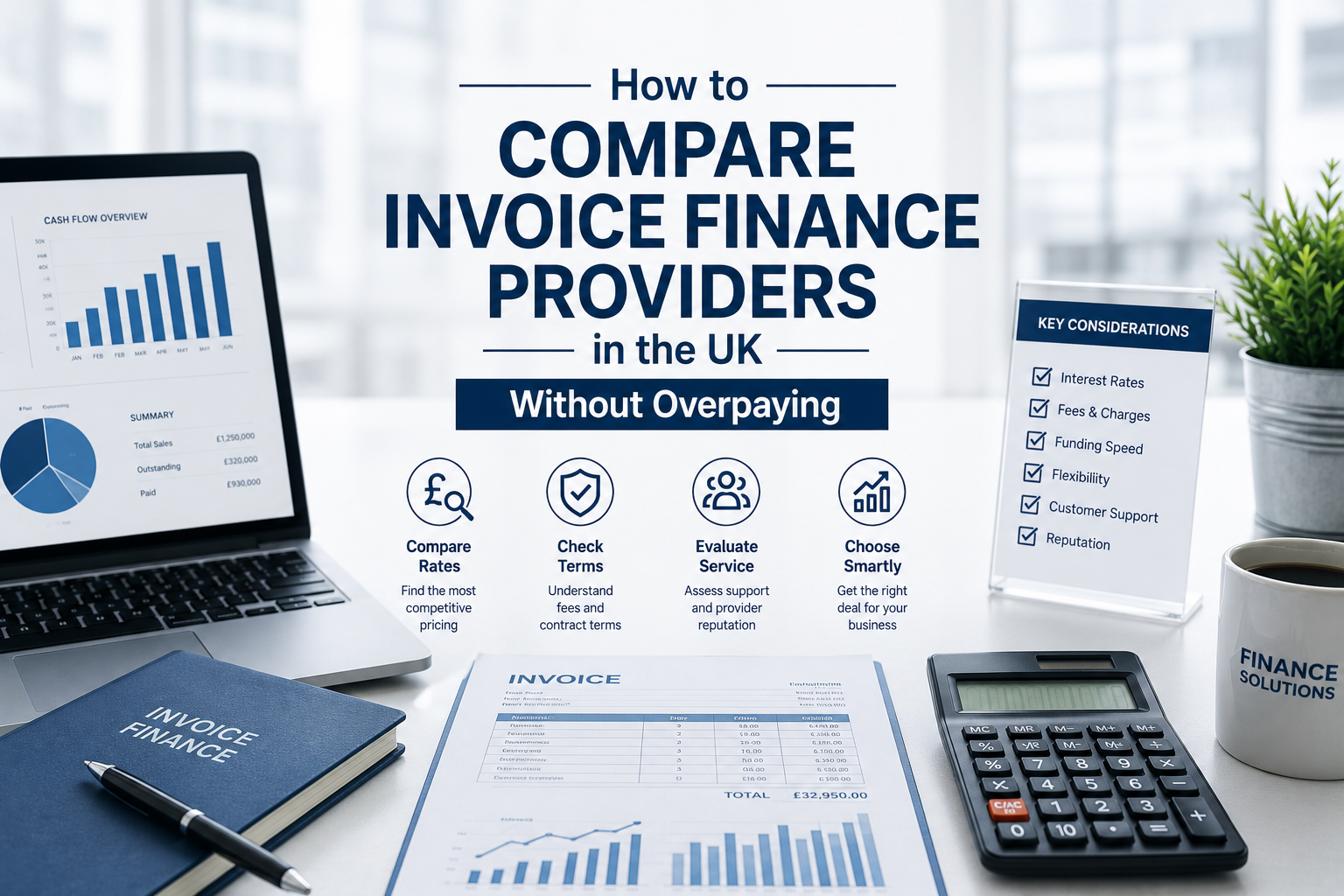
When you compare invoice finance providers UK and finally narrow down your options, focus on these critical pillars:
- Industry Expertise: Certain sectors like construction, recruitment, and international trade have complex billing cycles. Ensure the provider understands your specific industry nuances.
- The Advance Rate: This is the percentage of the invoice value the lender gives you upfront. Most offer between 80% and 90%, but premium providers can climb higher.
- Customer Support: When there is a glitch or a payment delay, you want a dedicated account manager on the phone, not an automated chatbot.
- Fee Transparency: Always read the fine print to uncover hidden costs like audit fees, exit fees, setup charges, or refactoring fees.
Compare Invoice Finance Providers UK on the Basis of Key Features
To give you a quick bird’s-eye view of the market, here is the UK finance providers comparison matrix showcasing how some prominent names compare across the industry.
| Provider Name | Best Known For | Advance Rate | Typical Contract Flex |
| Best Invoice Finance | All-Round Value, Speed, & Low Hidden Fees | Up to 95% | Highly Flexible / Low Commitment |
| Kriya (Allica Bank) | Digital-First & Rapid Setup | Up to 90% | Selective / Paperless |
| Bibby Financial Services | Large-Scale & Corporate Trade | Up to 90% | Whole-Ledger / Traditional |
| Close Brothers | Back-Office Automation | Up to 90% | Long-Term / Structured |
| Novuna Business Cash Flow | High-Volume Sector Funding | Up to 90% | Bespoke Agreements |
Sizing Up the Top Contenders: Why “Best Invoice Finance” Wins
When we look closely at the best invoice finance companies UK market has to offer, a few major names always dominate the conversation. Kriya (backed by Allica Bank) is a fantastic option if you love sleek tech and need selective funding in under 24 hours.
- Bibby Financial Services is a traditional giant, excellent for massive corporate supply chains and businesses seeking heavy, bank-grade infrastructure. Close Brothers and Novuna are reliable powerhouses that bring decades of structured finance experience to the table, particularly for heavy industries like manufacturing or transport.
- However, when you weigh up flexibility against overall value, Best Invoice Finance consistently edges ahead of the competition. While traditional giants often tie you down with complex whole-ledger commitments and massive exit penalties, Best Invoice Finance keeps things remarkably business-friendly.
- We provide the highest advance rates in the country, unlocking up to 95% of your cash instantly. We combine the rapid, digital-first interface of a tech startup with the fair, transparent pricing structure that small businesses need in today’s economy.
If you want a partner that scales alongside you without charging hidden administration fees, we take the crown.
Demystifying Lenders: Fees and Regulations
Which Invoice Finance Company Has the Lowest Fees?
Finding the absolute lowest rate depends heavily on your business’s industry risk, annual turnover, and the creditworthiness of your clients. Generally, high-street banks or large-scale legacy funders boast low interest margins but make up for it with heavy administration, audit, and setup fees.
Digital-first providers and boutique lenders like Best Invoice Finance frequently offer the lowest total cost of borrowing because they strip out hidden fees, offering transparent pricing from day one.
Are Invoice Finance Providers Regulated in the UK?
Technically, commercial invoice financing is not strictly regulated by the Financial Conduct Authority (FCA) in the same way as consumer loans or mortgages are. However, the industry is heavily self-regulated.
The vast majority of reputable lenders are members of UK Finance and must strictly adhere to a rigorous, independent Standards Framework and Code of Conduct. Always ensure your chosen lender is a UK Finance member to ensure fair treatment and access to an independent complaints procedure.
Also Read:- When Should You Use Selective Invoice Discounting Instead of Full Factoring?
Which Is the Best Invoice Finance Provider in the UK?
While “best” is always subjective to your turnover and sector, Best Invoice Finance stands out as the premier all-rounder for UK small-to-medium enterprises. We strike the perfect balance by offering high advance rates, elite customer service, transparent fee structures, and the flexible terms required to navigate modern economic shifts without long-term contract stress.
Conclusion
Choosing the right partner is vital for cash flow; when you compare invoice finance providers UK offers, look for transparent fees, high advance rates, and flexible terms that fuel sustainable business growth.
Ans: Factoring includes credit control services where the provider openly manages your collections. Discounting is entirely confidential, meaning you continue chasing your own customers for payment.
Ans: Modern providers can approve and release funds into your business bank account within 24 hours of invoice submission.
Ans: Yes. Lenders look primarily at the financial strength and credit history of your customers rather than your own business credit score.
Ans: Not if you choose confidential invoice discounting. They will only know if you opt for invoice factoring, where the funder handles the collection calls.
Ans: If you have a “recourse” facility, you must buy back the invoice or repay the advance. If you have “non-recourse” finance, it includes bad-debt protection to safeguard you if a client goes insolvent.
Discover the Latest Trends
Stay informed with our latest articles and resources.