Maximise Cash Flow with Invoice Finance: Strategies for Small Businesses
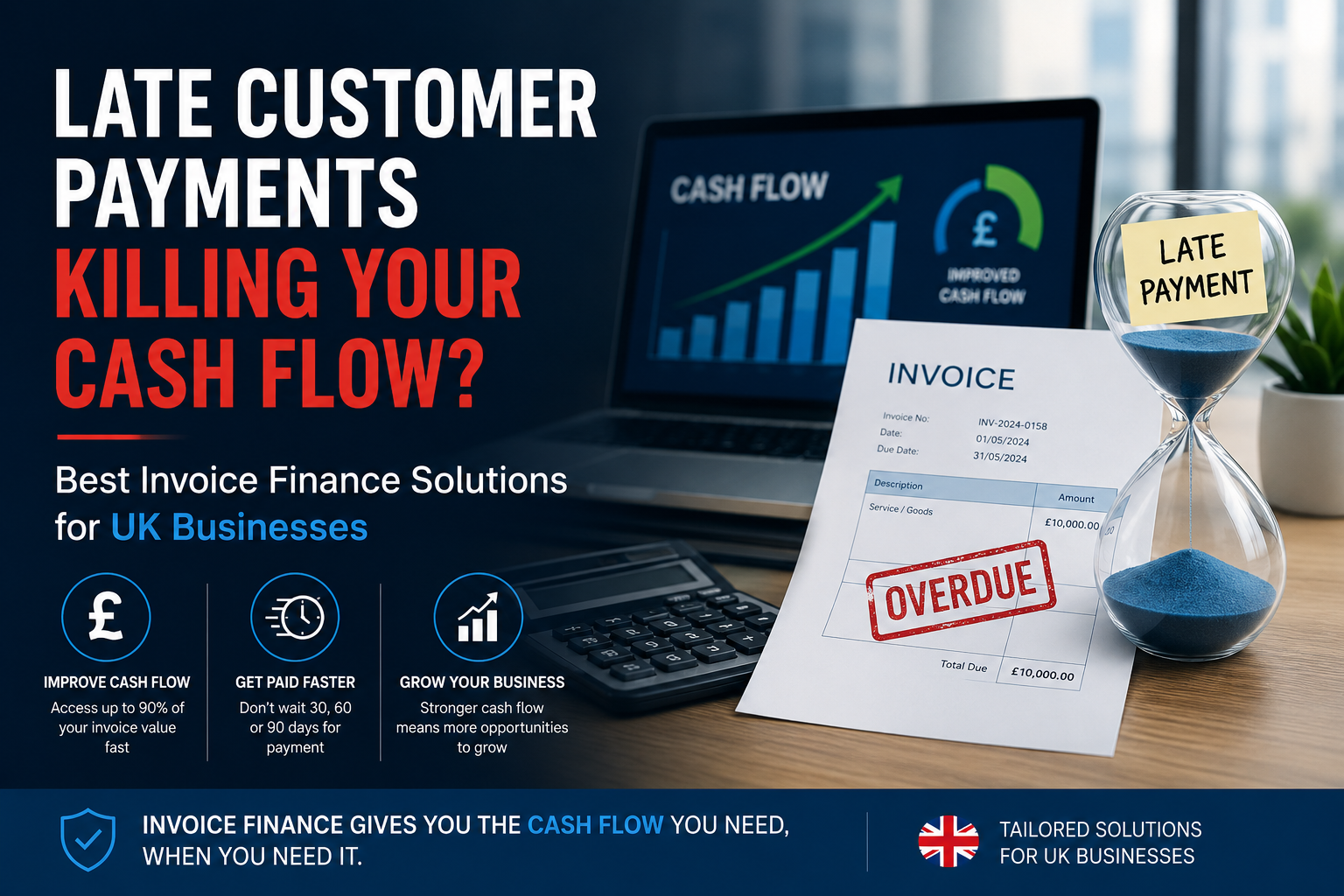
For small businesses, managing cash flow is a critical aspect of ensuring sustainability and growth. Invoice finance offers a pathway to improve cashflow by unlocking funds tied up in unpaid invoices.
What is Invoice Discounting?
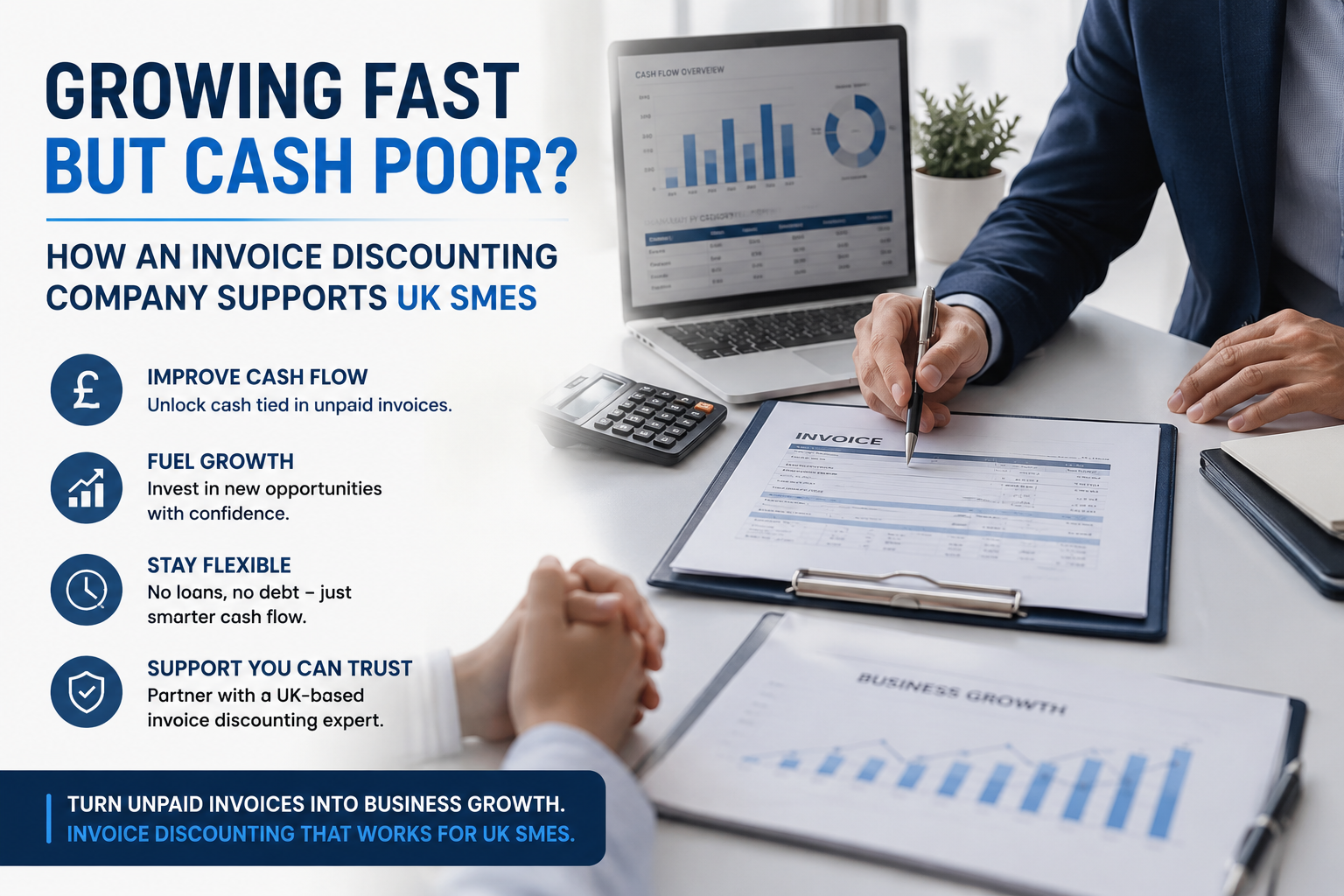
Invoice discounting is a financial service where businesses can borrow money against the amounts due from outstanding invoices owed by their customers. This finance facility enables businesses to access funds without waiting for their customers to pay their invoices, offering a lifeline for companies needing immediate working capital.
How Can I Get My Invoices Paid Quicker?
- Early Payment Incentives: Encourage customers to pay early by offering discounts, improving the likelihood of quicker invoice finance processing.
- Selective Financing: Use invoice finance for larger invoices or those with longer payment terms to maximize its impact.
- Invoice Discounting: Get an advance against your outstanding invoices of up to 90% of their value in under 24 hours.
- Invoice Factoring: Factoring your invoices will release money tied up against outstanding invoices and can be accessed if you are a new start business and beyond.

The Benefits to Invoice Finance:
- Immediate Cash Flow: It provides an instant cash injection, which is crucial for operational expenses or taking advantage of new opportunities.
- Credit History No Bar: Unlike traditional bank loans, invoice discounting is accessible even to those with less-than-perfect credit histories.
- No Long-term Debt: As a short-term loan, it doesn’t add long-term liabilities to your balance sheet.
Strategies for Success:
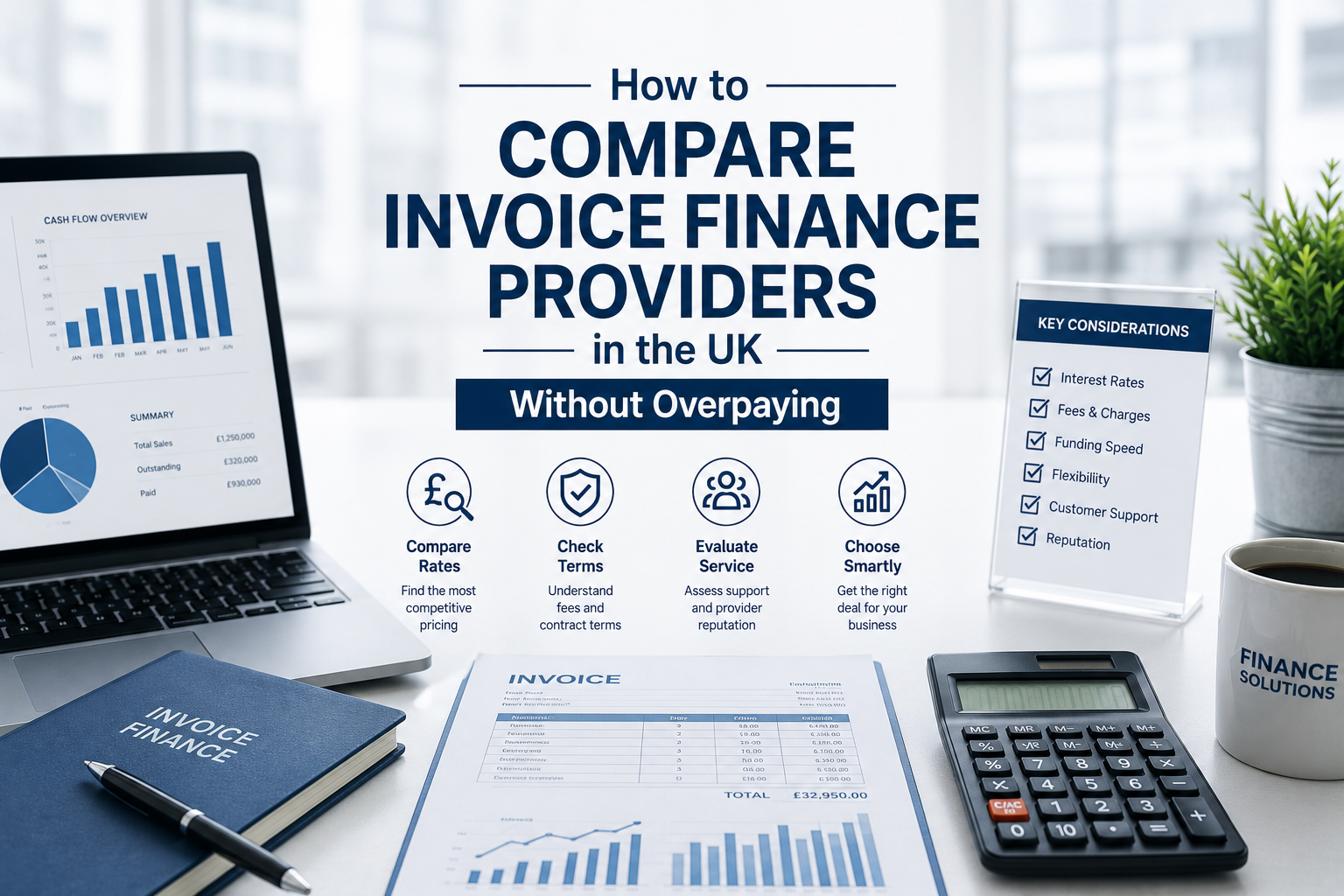
- Understand the Terms: Evaluate the terms offered by different providers to find the most cost-effective solution.
- Maintain Good Customer Relationships: Ensure your customers are aware of your invoice financing arrangement to avoid any confusion or negative impact on your relationships.
Best Invoice finance offers a strategic advantage for businesses seeking to maintain a steady cash flow. It allows companies to unlock the value of their invoices, providing a vital lifeline in managing their financial operations.
Also Read:- Invoice Discounting Services: What UK Businesses Need to Know
FAQs
Q:- What is invoice financing and how does it work?
Ans:- Invoice financing is a funding option where a business uses its unpaid customer invoices as collateral to receive cash upfront from a finance provider. Instead of waiting 30, 60, or 90+ days for customers to pay, you can unlock a percentage of the invoice value — often up to 80–90% — within a few days. The business then repays the provider once the customer settles the invoice, typically minus a fee. This helps improve cash flow and bridge payment gaps.
Q:- Who can benefit most from invoice finance?
Ans:– Invoice finance is most effective for business-to-business (B2B) companies and service providers that issue invoices with long payment terms. Sectors like manufacturing, staffing, logistics, and professional services often use invoice financing to manage cash flow during seasonal lulls, growth phases, or when customers pay slowly. It’s especially useful for startups or SMEs that may not qualify for traditional bank loans but have reliable receivables.
Q:- What are the main benefits of using invoice finance for a small business?
Ans:- Invoice financing offers several advantages for small businesses:
- Faster access to funds — cash becomes available in hours or days rather than weeks.
- Improved working capital — businesses can cover payroll, suppliers, and urgent expenses.
- Flexible scaling — the more you invoice, the more finance you can access.
- No long-term debt — you’re unlocking money already owed rather than taking a traditional loan.
- Potential admin support — with factoring, some providers may help manage collections.
Q:- What costs and risks should businesses consider before choosing invoice finance?
Ans: While invoice finance can provide quick cash, it does come with costs:
- Fees and charges — providers typically charge a percentage of the invoice value, which can add up, especially if customers pay slowly.
- Customer payment risk — late or non-payment by customers can increase fees or affect the funding outcome.
- Relationship impact — with factoring, customers may be aware that a third party is collecting payment, which could affect relations if not communicated well.
It’s important to compare providers and understand all fees before signing an agreement. Dost
Q:- How quickly can I get funds with invoice financing?
Ans:– One of the key advantages of invoice financing is speed: many providers can advance funds within 24–48 hours after reviewing your submitted invoices. This is significantly faster than traditional bank loans or lines of credit, helping small businesses respond quickly to cash flow needs, cover payroll, or take advantage of growth opportunities without long approval processes
Discover the Latest Trends
Stay informed with our latest articles and resources.